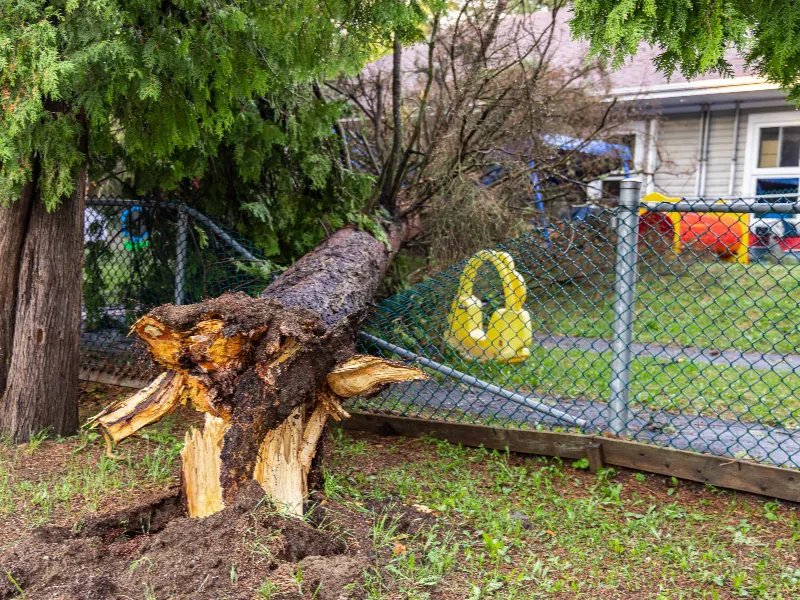
Tree on the roof. Wind-blown shingles. Hail across the siding. Rain coming through where the structure used to be. We respond 24/7 · roof tarping, board-up, tree removal coordination, water extraction, and full rebuild · from one IICRC-certified, veteran-led team.
Most restoration companies handle the cleanup after a storm. We arrive while the situation is still active · securing the structure, stopping further damage, and beginning documentation before the adjuster has even called you back.
Heavy-duty polyethylene tarping over any compromised roof section. Board-up on breached windows and walls. The envelope is sealed before we leave the site.
We coordinate certified arborists for the cut and lift. We manage the full scope · you have one point of contact, not two separate contractors working around each other.
Truck-mounted extraction pulls water that entered through the breached roof or siding. Storm-driven rain intrusion is treated with the same urgency as any water loss.
Commercial air movers and LGR dehumidifiers targeted at ceiling cavities, wall assemblies, and attic insulation. Daily moisture readings until dry-standard is confirmed.
Xactimate-grade scope, real-time photo documentation, moisture mapping. We submit to your adjuster and flag when the windstorm deductible differs from your base deductible.
Roof deck, framing, drywall, flooring, cabinets, trim · rebuilt by the same Guardian Angel crew. From the studs up. No sub-contractor handoffs.
A compromised roof is not a static problem. Rain re-enters with every passing weather system. Attic insulation becomes a slow-release moisture reservoir. Ceiling drywall wicks water down into wall cavities you cannot see. Within 24 hours, mold spores activate in saturated materials. Within 72 hours, framing warps, subfloor adhesives fail, and a roofing claim becomes a full interior water damage claim stacked on top of it.
That is why roof tarping is not a next-business-day task. We dispatch for emergency roof tarping calls the same way we dispatch for active flooding · on-site within 2 hours, around the clock, with the equipment to seal the envelope and document the scope before conditions get worse.
Call now · we are already on the way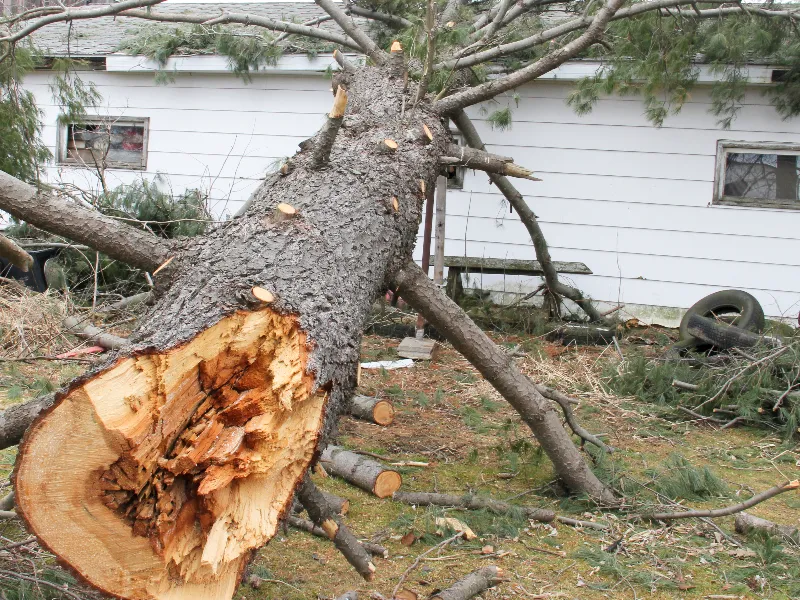
From the moment you call to the final walkthrough, here is exactly how a storm damage restoration unfolds at Guardian Angel.
Your call routes to dispatch · never a corporate call center. We assess whether the structure is safe to enter, coach you through safe steps while the crew loads the truck, and dispatch immediately. On-site within 2 hours anywhere in Hamilton County.
The first job on-site is stopping new weather from entering. Heavy-duty tarping over open roof sections. Board-up on breached windows and exterior wall penetrations. The structure is secured before any other scope work begins.
If a tree is on the structure, we coordinate certified arborists for the cut, lift, and debris removal. Our crew manages the interface so you are not caught between two separate contractors trying to schedule around each other.
Any water that entered through the breach gets extracted with truck-mounted equipment. Thermal imaging and moisture meters map exactly where it traveled · ceiling cavities, wall assemblies, attic insulation, subfloor. We document all of it.
Commercial air movers and LGR dehumidifiers run continuously. Daily moisture readings, equipment adjustments to reach hidden cavities. EPA-registered antimicrobial applied to all affected surfaces. Mold prevention is built into the drying phase, not added after.
Full written scope, daily progress photos, moisture maps submitted to your adjuster. We flag when a windstorm or hail deductible applies separately from your base homeowners deductible and advocate for the full documented scope.
Roof deck, sheathing, drywall, flooring, trim · rebuilt by the same Guardian Angel crew, not a sub-contractor we have never met. We walk every room with you at the final walkthrough. If something is not right, it gets fixed before the project closes.
We are based in Noblesville and respond throughout Hamilton County. These are the specific storm damage scenarios we handle most frequently across the region.
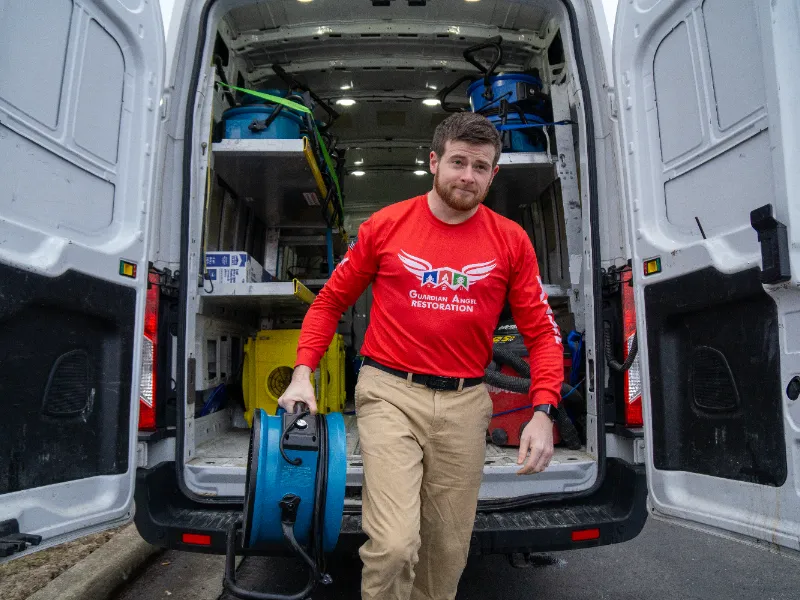
High-wind events bring mature oaks and maples down on residential roofs. We tarp, coordinate the arborist, extract rain intrusion, and begin the structural scope within hours of the call.
Widespread shingle displacement across multi-family developments in Fishers exposes decking to successive rain events. We handle multi-unit scope from a single point of contact.
Spring hail events in Carmel regularly produce significant roof and siding claims. We document hail impact size, density pattern, and resulting penetrations for an Xactimate-grade adjuster scope.
Compromised siding, failing window seals, or lifted flashing channels wind-driven rain into wall cavities without a visible breach. Thermal imaging finds it before mold does.
Lightning strikes can ignite attic framing, split structural members, and create hidden char inside wall cavities. We assess structural integrity, contain any fire damage, and document the full scope.
Downed branches on gutters, downspouts, or exterior HVAC condensers create secondary drainage failures that feed water toward the foundation. We document and scope the full exterior impact.
Headquartered in Noblesville. Crews dispatched throughout central Indiana within the 2-hour response window. Click your city for a local response page.
We arrive on-site within 2 hours of your call, 24/7. Once on-site, a standard residential roof tarp is installed within 1–2 hours depending on access and damage extent. Every hour an open roof sits in active or post-storm weather drives additional water intrusion into the structure below · speed matters.
We coordinate certified arborists for the cut and removal work. Our team handles the surrounding scope: securing the roof envelope, tarping open areas, extracting any water that entered, and documenting the full structural damage. We manage the full response from one point of contact so you are not trying to juggle a tree service and a restoration company at the same time.
Wind and hail damage are covered under most standard homeowners policies, but the deductible may differ from your base deductible. Many policies carry a separate windstorm or hail deductible · typically 1 to 2 percent of your dwelling coverage · which can be significantly higher than a flat dollar deductible. We help you read your policy, identify which deductible applies, and document the full scope so your claim reflects actual damage.
Roof tarping is the installation of heavy-duty polyethylene sheeting over a storm-compromised roof section to stop weather from entering the structure. It is an emergency protective measure, not a repair. A properly installed tarp stops water intrusion while the full restoration scope is documented and insurance is coordinated. Delaying it turns a roofing claim into a full interior water damage claim on top of it.
No. We begin emergency mitigation immediately · no claim approval required. Waiting for adjuster sign-off while the roof is open lets secondary water damage accumulate. We document every step in real time so your insurer has complete records when the claim is submitted.
We respond to trees on roofs, wind-driven rain through compromised siding or window frames, hail damage, downed branches that damage gutters or HVAC condensers, lightning strikes, and the interior water damage that follows any of those events. We also handle full structural rebuilds when the damage goes deeper than the surface.
Emergency stabilization · tarping, board-up, initial water extraction · happens the day of response. Structural drying typically runs 3–5 days. Full rebuild timeline depends on scope: minor damage can close in 1–2 weeks; a tree-on-house with interior water intrusion can run 4–10 weeks. We give you a clear timeline at the on-site assessment.
April through September is the peak severe weather window for central Indiana. Hamilton County sits within the EF-2 tornado risk zone, and the region sees multiple high-wind and hail events each season. Tree-on-roof calls in Noblesville and Westfield, wind-shingle loss in Fishers, and hail damage across Carmel are the calls we respond to most frequently during storm season.