Sewage backup is the most hazardous water loss a home can experience. Category 3 black water carries bacteria, viruses, and parasites that standard cleanup does not eliminate. Our IICRC-certified, veteran-owned team follows the IICRC S500 Category 3 protocol · full PPE containment, dedicated extraction, EPA-registered disinfection, and structural drying · so the contamination is gone, not just moved.
The IICRC classifies water losses in three categories. Category 1 is clean water · a burst supply line. Category 2 is gray water · an overflowing washing machine. Category 3, called black water, includes sewage backup, toilet overflow, and municipal sewer line surges. It contains live pathogens. Sewage backup cleanup and category 3 water damage cleanup require a different protocol entirely.
Category 3 black water carries E. coli, hepatitis A, norovirus, and parasites. Exposure through skin contact, inhalation, or ingestion poses a serious health risk. A shop vac and bleach do not meet the standard.
Drywall, carpet pad, and insulation below the contamination line absorb sewage and cannot be disinfected in place. Under IICRC S500 Category 3 protocol they are removed. This is not optional · it is what prevents re-contamination.
The organic matter in black water feeds mold growth faster than a clean-water loss. If structural drying does not follow extraction within hours, mold remediation becomes part of the scope.
Sewer backup endorsements typically demand a documented scope before reimbursement. DIY cleanup with no moisture maps, no removal records, and no clearance readings gives your adjuster grounds to deny the claim.
Our sewage extraction equipment is never reused on clean-water jobs. Cross-contamination between jobs is an industry problem we eliminate by keeping Category 3 gear separate and fully decontaminated between every dispatch.
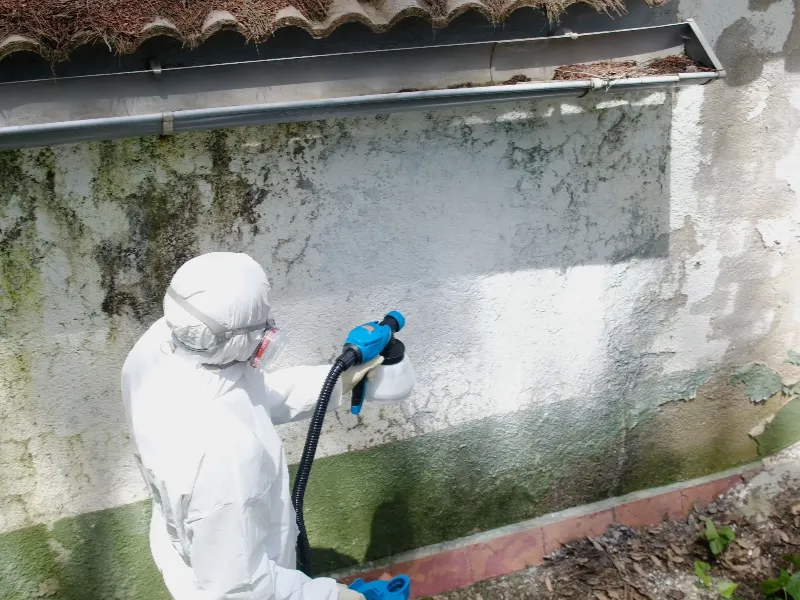
Our technicians are trained in OSHA bloodborne-pathogen and biohazard handling protocols. Every sewage job begins with proper PPE staging and containment barriers before anyone enters the affected area.
Sewage backup cleanup done correctly is not fast. It is thorough. Here is exactly what happens from the moment our crew arrives to the final clearance reading.
On arrival, we assess the contamination boundary and set containment barriers before entering. Full respirators, Tyvek suits, and dedicated boots. The unaffected areas of your home stay unaffected.
Sewage backup enters homes through several paths · sewer main backup from the municipal line, sump pump failure, toilet overflow, or a failed lift station. We identify the source first, because the source drives the scope and the insurance documentation.
We extract standing sewage with equipment kept exclusively for Category 3 black water cleanup. It is never reused on clean-water jobs. Extraction removes the bulk of contamination before the decontamination work begins.
Drywall, carpet, carpet pad, and insulation below the contamination line are removed and bagged for disposal. These materials cannot be disinfected in place. Everything removed is documented by photo and measurement for your insurance adjuster.
After removal, we apply EPA-registered disinfectant to every exposed hard surface · concrete, framing, subfloor. Dwell time is not skipped. This is where most corners get cut in the industry. We hold the required contact time before moving to drying.
HEPA air scrubbers run continuously to capture airborne contaminants. Commercial structural drying equipment brings the cavity down to clearance moisture levels. Daily readings confirm progress. We do not pull equipment until the numbers are right.
Once the structure clears, we rebuild · new drywall, insulation, flooring, and paint · from the same Guardian Angel crew. Before we call the job complete, we walk every affected room with you. Your peace of mind is our final deliverable.
Two corners get cut in sewage cleanup more than any others: leaving contaminated porous materials in place, and skipping disinfectant dwell time. Both failures leave pathogens behind. Both lead to re-opened claims months later when the problem resurfaces.
Our technicians are IICRC-certified and OSHA biohazard-trained. They wear full-face respirators and Tyvek on every sewage job, regardless of size. Veteran-owned means accountability runs through the whole job, not just the first call. When our equipment leaves your property, the contamination leaves with it.
Call (812) 441-4814 · 24/7
Hamilton County has specific conditions that drive sewage backup losses. Aging sewer infrastructure in older Noblesville and Carmel neighborhoods causes sewer main backups during heavy-rain events. Fishers and Westfield see municipal line overflows when storm volume exceeds capacity. Lift-station failures are common on properties not connected to a gravity sewer.
On insurance: standard homeowners policies almost always exclude sewer backup. Coverage requires a sewer backup endorsement · a relatively inexpensive rider that typically costs $50–$100 per year and provides $5,000–$20,000 in coverage. Many Hamilton County homeowners carry it without realizing it.
We help you check your policy before work begins when time permits. We document the full scope for your adjuster. We advocate for the homeowner, not the insurance policy. And we begin mitigation immediately · no claim approval required to start.
How insurance claims workAfter extraction and disinfection, sewage cleanup transitions to structural drying · except the timeline is less forgiving than a clean-water loss. The organic matter in black water accelerates mold growth. Every hour of elevated moisture after disinfection is an hour mold gains ground.
We run commercial industrial air movers and dehumidifiers calibrated to the room volume and cavity type. Moisture readings are taken daily. Equipment placement adjusts as the dry-down progresses. We do not pull the dryers until clearance readings confirm the structure is within normal range.
About our drying equipment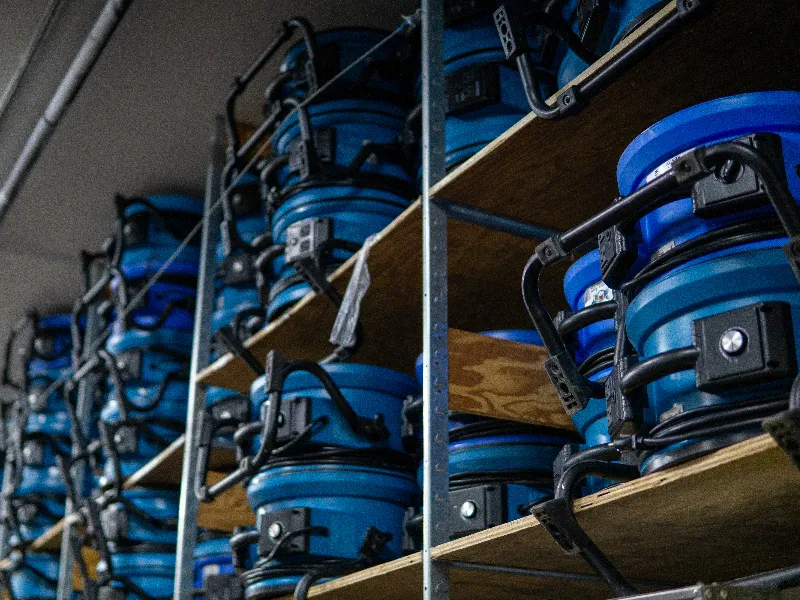
Headquartered in Noblesville. Crews dispatched throughout central Indiana within 2 hours of your call, 24/7, 365 days a year.
In most cases, no. Category 3 black water contains bacteria, viruses including E. coli and norovirus, and parasites that are hazardous through skin contact, inhalation, or ingestion. We recommend relocating until extraction, disinfection, and HEPA air scrubbing are complete. We will advise you specifically once we assess the extent of the loss.
We strongly advise against it. Category 3 sewage is classified as a biohazard under OSHA and IICRC S500 standards. Without proper PPE, dedicated extraction equipment, EPA-registered disinfectants with correct dwell time, and HEPA air scrubbing, contamination is typically spread rather than contained. DIY cleanup also voids many insurance claims because there is no documented scope.
Standard homeowners policies typically exclude sewer backup unless you added a sewer backup endorsement · usually a relatively inexpensive rider ($50–$100 per year) with coverage limits of $5,000–$20,000. We help you check your policy before work begins when time permits, and we document the full scope for your adjuster regardless. We begin mitigation immediately and do not wait for claim approval.
Cost depends on the source, contamination extent, and how much porous material must be removed. Where a sewer backup endorsement applies, we bill your carrier direct. Where there is no coverage, we provide a full Xactimate-grade scope before work begins. We offer flexible financing through trusted national lenders. Free on-site assessment.
Odor that persists after extraction almost always means contaminated porous materials were not removed, or disinfectant dwell time was cut short. Our protocol removes all contaminated drywall, carpet pad, and insulation below the contamination line, applies EPA-registered disinfectant with full dwell time, and runs HEPA air scrubbers until clearance readings are clean.
Not when the IICRC S500 Category 3 protocol is followed correctly. That means physical removal of contaminated porous materials, EPA-registered disinfectant applied to all hard surfaces with required dwell time, and HEPA air scrubbing. We do not consider a sewage cleanup complete until clearance readings confirm the space is safe.
Yes · and it moves faster after sewage backup than after a clean-water loss, because the organic matter in black water accelerates mold growth. We apply EPA-registered antimicrobial treatment, run HEPA air scrubbers, and monitor moisture daily during structural drying. If mold is already present at the time of cleanup, we fold mold remediation into the same scope.
The most common sources we see are aging sewer infrastructure in older Noblesville and Carmel neighborhoods causing main-line backups during heavy rain, Fishers and Westfield municipal line overflows when storm volume exceeds capacity, sump pump failures that allow groundwater to enter finished basements, and single-family lift-station failures on homes not connected to a gravity sewer.