A pipe burst on the third floor at midnight. A kitchen fire in a restaurant during prep. HVAC mold in a multi-family complex with 80 occupied units. We respond to all of it · business-continuity planning, dedicated project manager, after-hours crew scheduling, and direct insurance coordination · from one IICRC-certified, veteran-led team.
Restoration technique is the same. What changes is the operational constraint. A restaurant owner cannot close for a week. A senior living community cannot displace residents. A medical clinic cannot violate air-quality requirements. We plan the restoration around your constraint, not around our schedule.
Apartments, condos, townhomes, and senior living communities. Units documented separately. Tenant coordination handled. Fishers and Carmel properties are our most frequent multi-family commercial losses.
Strip centers, standalone storefronts, and restaurants. Damage zones isolated. Mitigation scheduled to protect operating areas, inventory, and food-service equipment.
Single-tenant and multi-tenant professional buildings. Server room and equipment isolation. After-hours drying scheduled around business operations so tenants are never displaced mid-workday.
Warehouses, manufacturing facilities, and flex space. Large-footprint drying rigs scaled to square footage. Inventory and equipment chain-of-custody documentation included.
Hotels, conference centers, and event spaces. Phased room recovery to maintain occupancy where possible. Booking-impact documentation provided for business interruption claims.
Clinics, dental offices, and licensed childcare facilities. Air-quality containment protocols maintained throughout. Work sequenced to comply with health code and occupancy requirements · no shortcuts on regulated environments.
Most residential restoration runs on a straightforward schedule · we work when we work. Commercial properties do not have that flexibility. Tenants have leases. Customers have reservations. Regulators have inspection timelines.
From the first on-site assessment, we produce a business-continuity plan: which zones are isolated, which remain operational, what work gets done during business hours versus nights and weekends, and what ventilation segregation keeps active areas safe while mitigation runs adjacent.
Crew scaling is built around your operational requirements, not a fixed shift size. If the job needs a larger crew on a Saturday night to finish before Monday opening, that is what we bring.
Call (812) 441-4814 · 24/7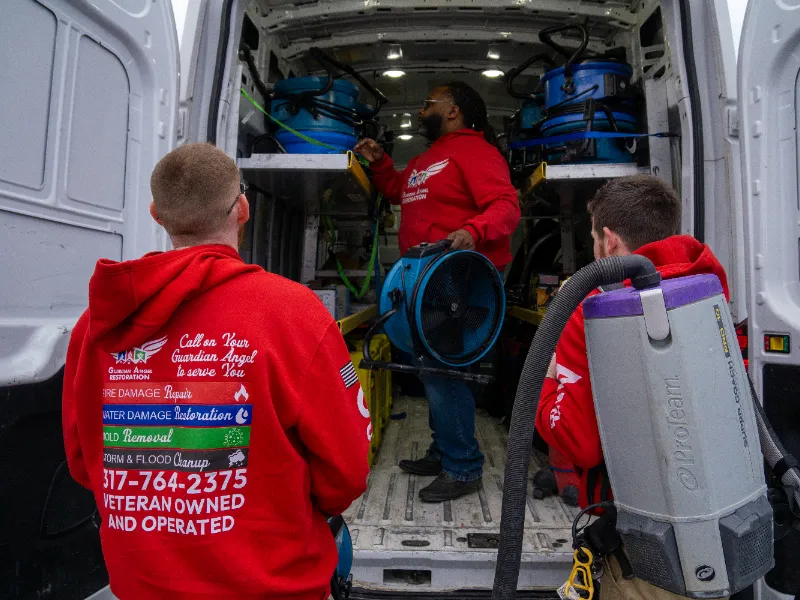
From the moment you call to the moment your facilities lead signs off, here is exactly how a commercial restoration unfolds at Guardian Angel.
Your dedicated project manager is on-site within 2 hours. The first job is stopping the source, establishing safety, and walking the full damage zone before any work begins. Thermal imaging and moisture meters map where water or smoke traveled · behind walls, above ceilings, under raised floors. You see the scope map. So does your adjuster.
Damage zones are isolated from operating areas with physical containment and, where required, negative-pressure ventilation to prevent cross-contamination. Your PM delivers a written business-continuity schedule: what work runs during occupancy, what shifts to nights and weekends, and which areas remain fully operational throughout.
Water extraction uses truck-mounted equipment. Structural drying uses commercial LGR dehumidifiers and industrial air movers calibrated to the cubic footage of the affected area. Soot and smoke removal on commercial fire losses uses the same IICRC-standard techniques as residential · at larger scale. Moisture readings are taken daily and documented throughout.
Commercial contents · inventory, equipment, furniture, documents · are packed out with commercial-grade chain-of-custody tracking. Every item is photographed, listed, and either cleaned on-site, transported to our facility, or documented as a loss for insurance purposes. Nothing disappears from the record.
Reconstruction is scheduled to maintain operations wherever possible. Same Guardian Angel crew handles drywall, flooring, ceilings, mechanical enclosures, and finish work · no sub-contractor handoffs. When permits are required, we coordinate with the relevant building authority directly.
Commercial property policies often include business interruption coverage that pays for lost income during restoration. We produce the documentation insurers require to release those funds: affected square footage, occupancy disruption timeline, day-by-day restoration milestones. This is a standard deliverable on every commercial project · not an add-on you need to ask for.
Before the project closes, your project manager walks every affected area with you or your facilities lead · line by line. If something is not right, it gets fixed. Your peace of mind is our final deliverable.
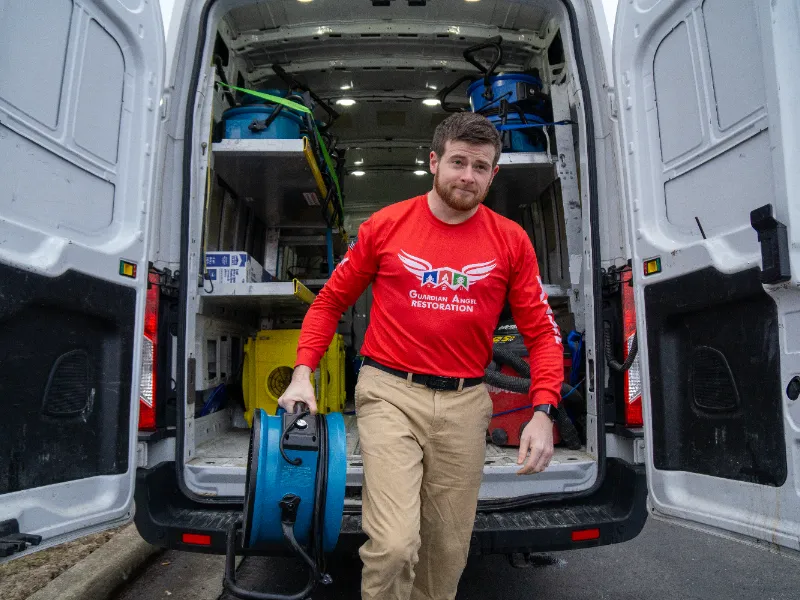
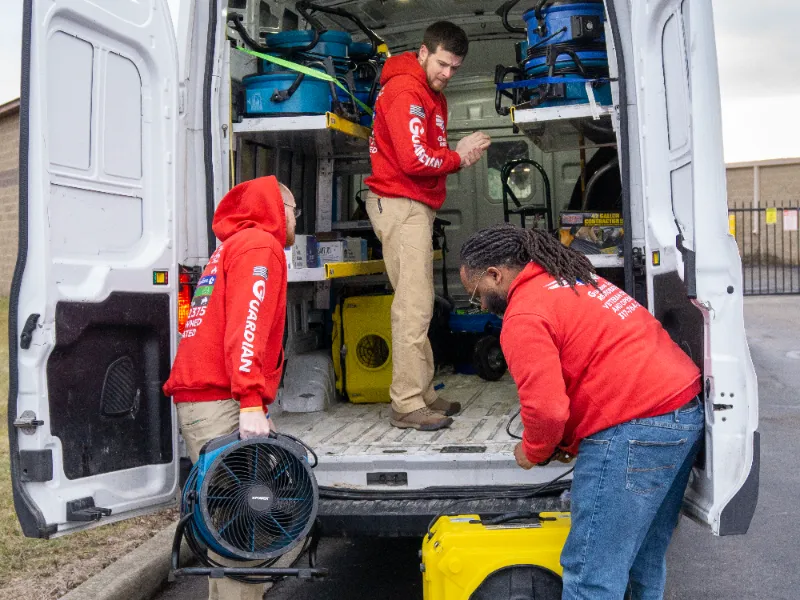
Residential equipment does not move commercial volume. Large-footprint water losses in multi-family buildings or warehouses require truck-mounted extraction units, banks of LGR dehumidifiers calibrated to the building's cubic footage, and enough industrial air movers to cover the full affected area without relying on multiple mobilizations.
We carry that equipment. Crew scaling matches the property, not a default dispatch size. When the loss demands more, we bring more · nights, weekends, or any hour the job requires.
Request a free on-site assessment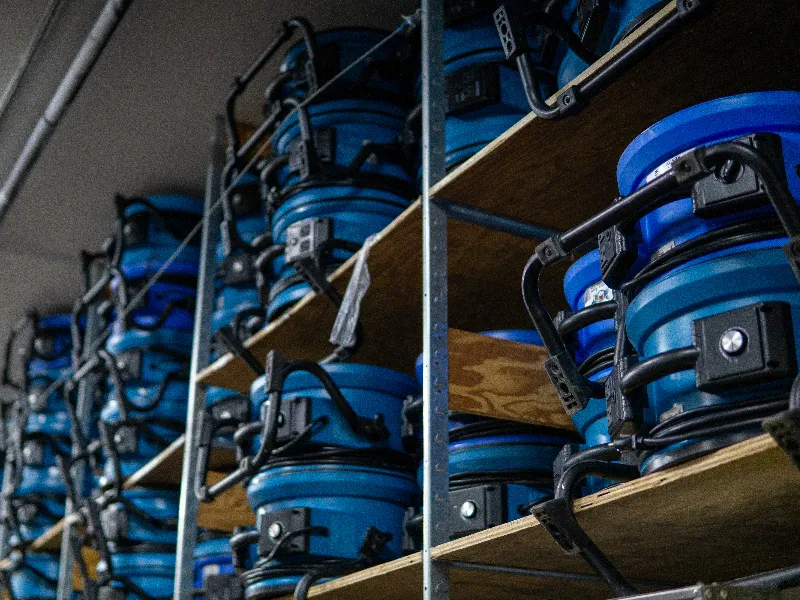
Headquartered in Noblesville. Commercial crews dispatched throughout central Indiana. Multi-family properties in Fishers and Carmel. Retail and office in the Carmel Arts District, Westfield Grand Park corridor, and Indianapolis metro. 2-hour guaranteed response, anywhere in our service area.
In most cases, yes. Our first step after damage assessment is a business-continuity plan · we contain the affected zone, establish ventilation segregation from operating areas, and schedule heavy mitigation work for nights and weekends when occupancy is lowest. The goal is to protect the property without displacing tenants or stopping operations.
Yes. Multi-family water damage is one of the most common commercial losses we handle across Hamilton County · apartment complexes in Fishers and Carmel, senior living communities, townhome associations. We coordinate directly with property managers and document each unit separately for insurance purposes.
Business interruption (BI) coverage pays a commercial policyholder for lost income while their property is being restored. Insurers require documentation of affected square footage, occupancy disruption timelines, and restoration milestones before they release BI funds. We produce that documentation as a standard part of every commercial project · it is not an add-on.
Every commercial project has a single dedicated project manager assigned from the first on-site response through the final walkthrough. You do not rotate through different crew leads or call a general dispatch line for updates. One person. One number. One thread of accountability.
Yes. We are experienced with the containment and air-quality requirements of medical and dental clinics, childcare centers, and other regulated environments. Work in sensitive areas is scheduled and sequenced to comply with applicable health codes and occupancy rules throughout the restoration.
Our guaranteed on-site response time is 2 hours, 24 hours a day, 7 days a week. Commercial losses often involve more at stake per hour, so we dispatch with crew scaling appropriate to the property size and damage scope.
Yes. We communicate with the property insurer's adjuster directly, coordinating scope, documentation, and repair authorization on your behalf. For properties that involve multiple stakeholders · building owner, property manager, tenants, and building authority · we coordinate with all of them so you do not manage that chain alone.
We restore multi-family residential (apartments, condos, townhomes, senior living), retail (strip centers, standalone stores, restaurants), office (single-tenant and multi-tenant buildings), light industrial (warehouses, manufacturing, flex space), hospitality (hotels, event venues), medical and dental clinics, and schools and childcare centers across Hamilton County and Greater Indianapolis.