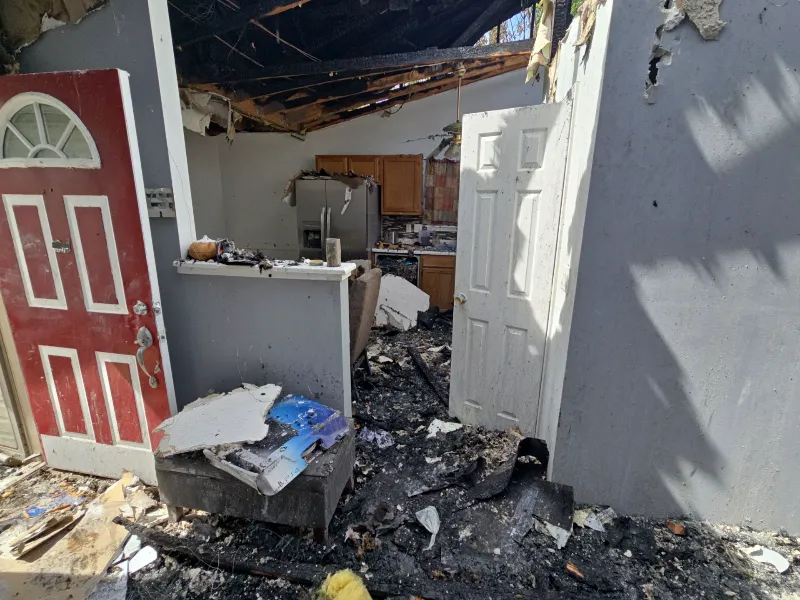
Kitchen grease fires at 6 p.m. Electrical fires in older Noblesville homes. Space heaters in January. When the fire department leaves, the real work begins · board-up, soot cleanup, odor removal, structural drying, rebuild from the studs up. IICRC FSRT-certified, veteran-owned, one team from first call to final walkthrough.
Most restoration companies stop at cleanup. We carry the job from emergency board-up through soot removal, odor elimination, structural drying, and complete reconstruction · same crew, same point of contact, one accountable veteran-owned team.
Plywood over broken windows, doors, and roof openings within the same 2-hour response window. Preserves your insurance coverage and protects the structure from weather and unauthorized entry.
Every salvageable item photographed, itemized, and transported to a controlled cleaning facility. Electronics, soft goods, and documents handled by protocol. Losses documented at replacement value.
Soot cleanup walls after fire requires dry chemical sponges to lift loose carbon, followed by IICRC-approved alkaline solutions to neutralize acidic residue. Acidic byproducts corrode metals and etch surfaces by the hour · we move immediately.
Thermal fogging penetrates cavities. Ozone treatment oxidizes lingering compounds in vacant spaces. Hydroxyl generators serve occupied or content-sensitive areas. Smoke odor migrates through HVAC · we treat the whole structure, not just the fire room.
Fire suppression water saturates flooring, insulation, and framing. Commercial air movers and LGR dehumidifiers run until every cavity reaches dry standard. Daily moisture readings document progress for your insurer.
Same Guardian Angel crew rebuilds drywall, flooring, cabinetry, and trim. No sub-contractor handoffs. No gap between mitigation and reconstruction. One point of contact to the final walkthrough.
Most homeowners assume the damage stopped when the fire did. It did not. Acidic soot begins etching into painted drywall, cabinet finishes, and metal fixtures within hours. Smoke odor migrates through HVAC systems, spreading residue into rooms the fire never reached.
Copper pipes and aluminum window frames start to corrode. Fabrics absorb smoke proteins that become exponentially harder to remove after 48 hours. That is why our guaranteed 2-hour on-site response matters · not as a marketing claim, but because the clock starts the moment the fire department leaves.
Call when disaster strikes · we will be there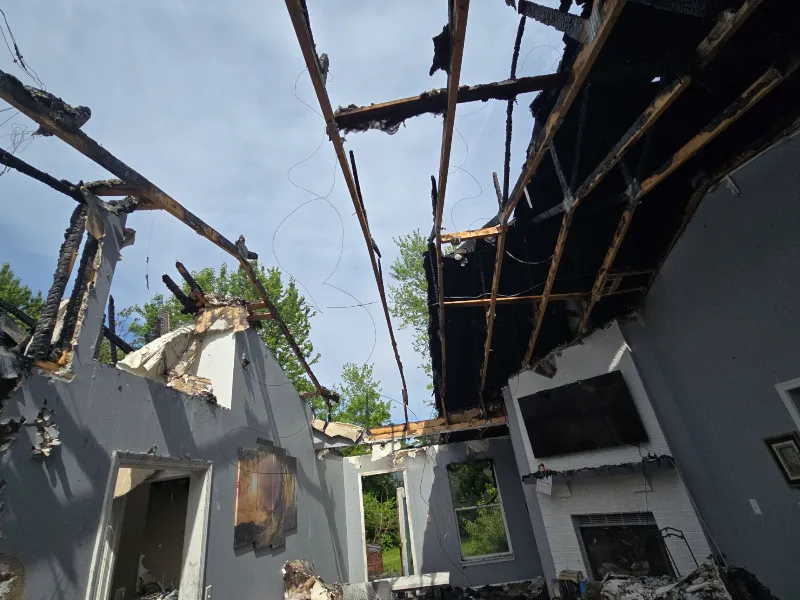
From the moment you call to the final walkthrough, here is exactly how a fire and smoke damage restoration unfolds at Guardian Angel.
Your call routes to dispatch · never a corporate call center. We coordinate with the fire department before entry, verify structural and air-quality safety, and coach you through immediate steps while the crew loads the truck.
Broken windows, compromised doors, and any roof openings get secured with structural plywood and heavy-duty tarps within the same dispatch. This step is required by most homeowners policies · we document it immediately for your adjuster.
Salvageable items are photographed, inventoried on-site, and transported to our controlled facility for professional cleaning. Clothing, furniture, documents, and electronics are segregated by protocol. Total losses are documented at replacement value for your claim.
Structural surfaces are cleaned ceiling-first, then walls, then floors, using dry chemical sponges followed by IICRC-approved alkaline solutions. Porous drywall that has absorbed soot past the paper face is removed and replaced. Metal fixtures receive anti-corrosion treatment to stop ongoing deterioration.
Thermal fogging neutralizes smoke molecules in wall cavities and subfloor spaces that physical cleaning cannot reach. Ozone treatment is applied in vacant areas. Hydroxyl generators handle occupied or content-sensitive zones. Odor returning after treatment means a charred source was missed · we trace it to the studs.
Fire hoses and sprinkler systems leave significant water inside walls, flooring, and insulation. Commercial air movers and LGR dehumidifiers run continuously with daily moisture readings until every affected cavity reaches dry standard · same protocol as a standalone water loss.
Drywall, flooring, cabinetry, trim · rebuilt by the same Guardian Angel crew that handled mitigation. No sub-contractor handed a half-finished job. Before the project closes, we walk every affected room with you, line by line. Your peace of mind is our final deliverable.
Fire damage is one of the most comprehensively covered losses under a standard homeowners policy · unlike mold or sewer backup, fire claims rarely hit sub-limit caps. Dwelling coverage, personal property, and additional living expenses (ALE) are all typically triggered in a significant fire loss.
Fire damage restoration in Indianapolis and the surrounding county follows recognizable patterns. Knowing the ignition source shapes the full restoration scope.
The most common residential fire call. Grease fires produce heavy black soot that coats ceilings and adjacent rooms quickly. Extinguishing agent residue also requires thorough IICRC-protocol cleaning.
Older homes in historic Noblesville and established Carmel neighborhoods carry aging wiring that can fail. Electrical fires travel in wall cavities and attic spaces · the hidden soot spread is often far wider than it looks.
Indiana winters drive space heater use. Space heaters placed too close to curtains, bedding, or furniture create fast-moving fires. The resulting soot is particularly fine and penetrates fabrics deeply.
Central Indiana's spring and summer storm seasons bring lightning strikes to roofs and attic spaces. These fires often smolder before becoming active · by the time they are detected, structural damage can be significant.
Unattended candles and holiday lighting are consistent year-round calls. These fires start in bedrooms or living areas where soft goods · drapes, upholstery, bedding · accelerate spread and absorb heavy smoke odor.
Fuel storage, dryer lint buildup, and overloaded circuits make garages and utility rooms a frequent ignition point. Fires here involve the HVAC system, spreading smoke throughout the entire structure before suppression.
Headquartered in Noblesville. Crews dispatched throughout central Indiana. 2-hour guaranteed response to every address below.
Smoke residue keeps spreading even after flames are extinguished. Acidic soot etches into painted surfaces, metals, and fabrics within hours. Smoke odor migrates through HVAC systems into unaffected rooms within the first day. The longer cleaning is delayed, the more surfaces become permanently stained or corroded. Immediate response · within 2 hours · is the single biggest factor in limiting total loss.
Soot cleanup walls after fire requires dry chemical sponges first to lift loose carbon, followed by wet-cleaning with IICRC-approved alkaline solutions to neutralize acidic residue. Porous surfaces like drywall often require removal and replacement when soot has penetrated the paper face. Metal fixtures and trim need anti-corrosion treatment. All work follows IICRC FSRT protocols.
Fire damage is one of the best-covered losses under standard homeowners policies · dwelling, personal property, and additional living expenses are typically all triggered. Unlike mold or sewer backup, fire claims rarely hit sub-limit caps. We bill insurance direct and no insurance claim is required to start emergency mitigation.
Board-up service secures your home immediately after a fire by covering broken windows, doors, and roof openings with structural plywood. It prevents weather intrusion, deters unauthorized entry, and is required by most homeowners insurance policies to preserve coverage. We provide emergency board-up and roof tarping within the same 2-hour dispatch window.
Permanent smoke odor removal requires thermal fogging to neutralize odor molecules in cavities air scrubbers cannot reach, ozone treatment in vacant spaces to oxidize lingering compounds, and hydroxyl generators for occupied or sensitive-content areas. Odor that comes back is a sign the source · charred structural material · was not fully removed. We trace it to the studs.
Fire suppression leaves significant water behind · from sprinkler systems, fire hoses, or both. That water saturates flooring, insulation, and structural framing the same way a plumbing loss does. Guardian Angel handles both the fire and smoke restoration and the resulting water mitigation in a single coordinated scope. One team, one point of contact, no gaps.
Many contents can be restored through professional pack-out, ultrasonic cleaning, and ozone treatment · including clothing, furniture, documents, and electronics (evaluated case by case). We inventory every item removed, document condition, and return cleaned contents or document total losses for your insurance claim.
Emergency mitigation · board-up, pack-out, soot cleaning, odor treatment, and structural drying · typically takes 5-10 days depending on scope. Full rebuild can range from 2 weeks for a single-room loss to 8-12 weeks for a whole-floor fire. We give you a clear timeline at the initial assessment.
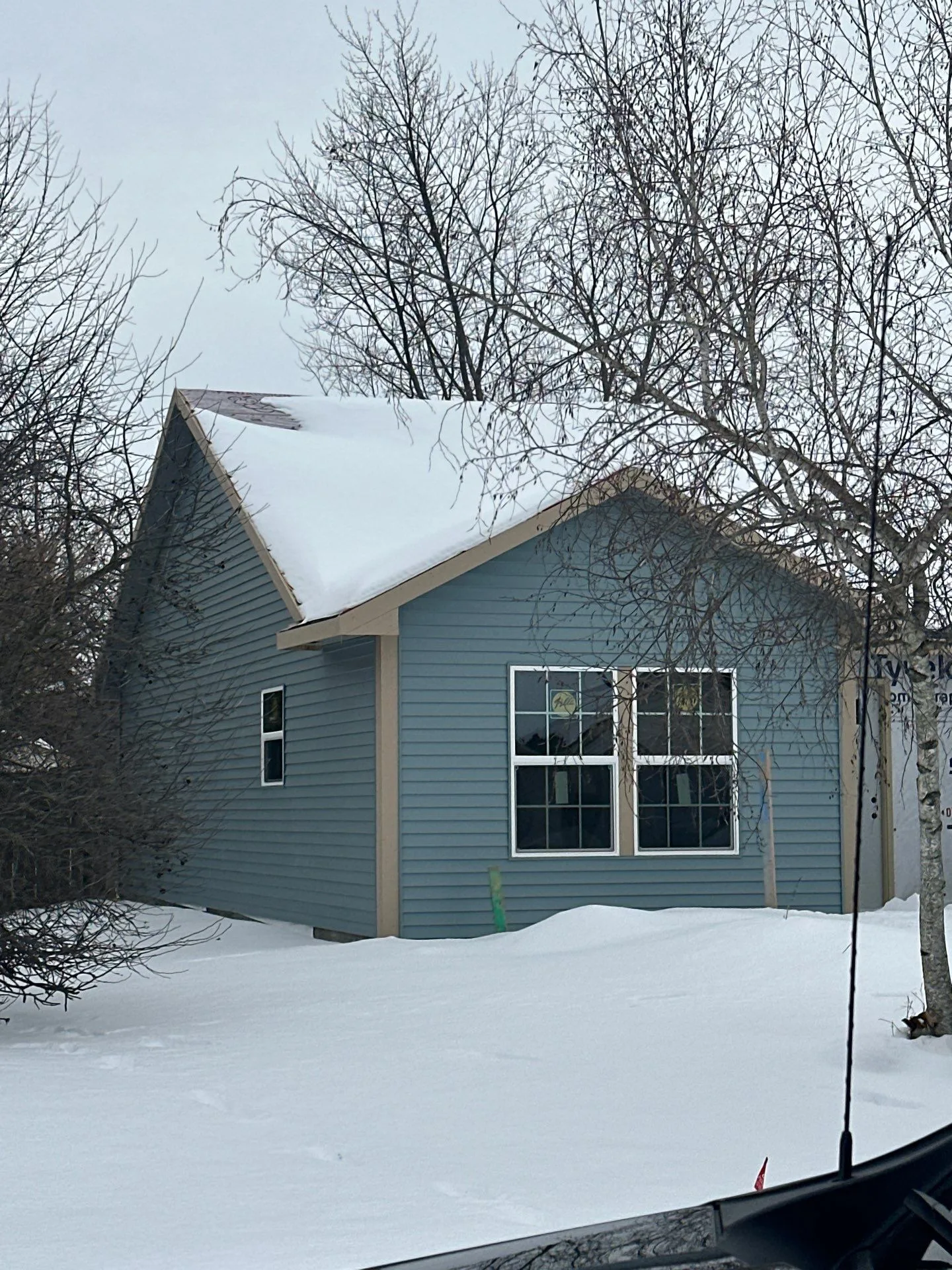
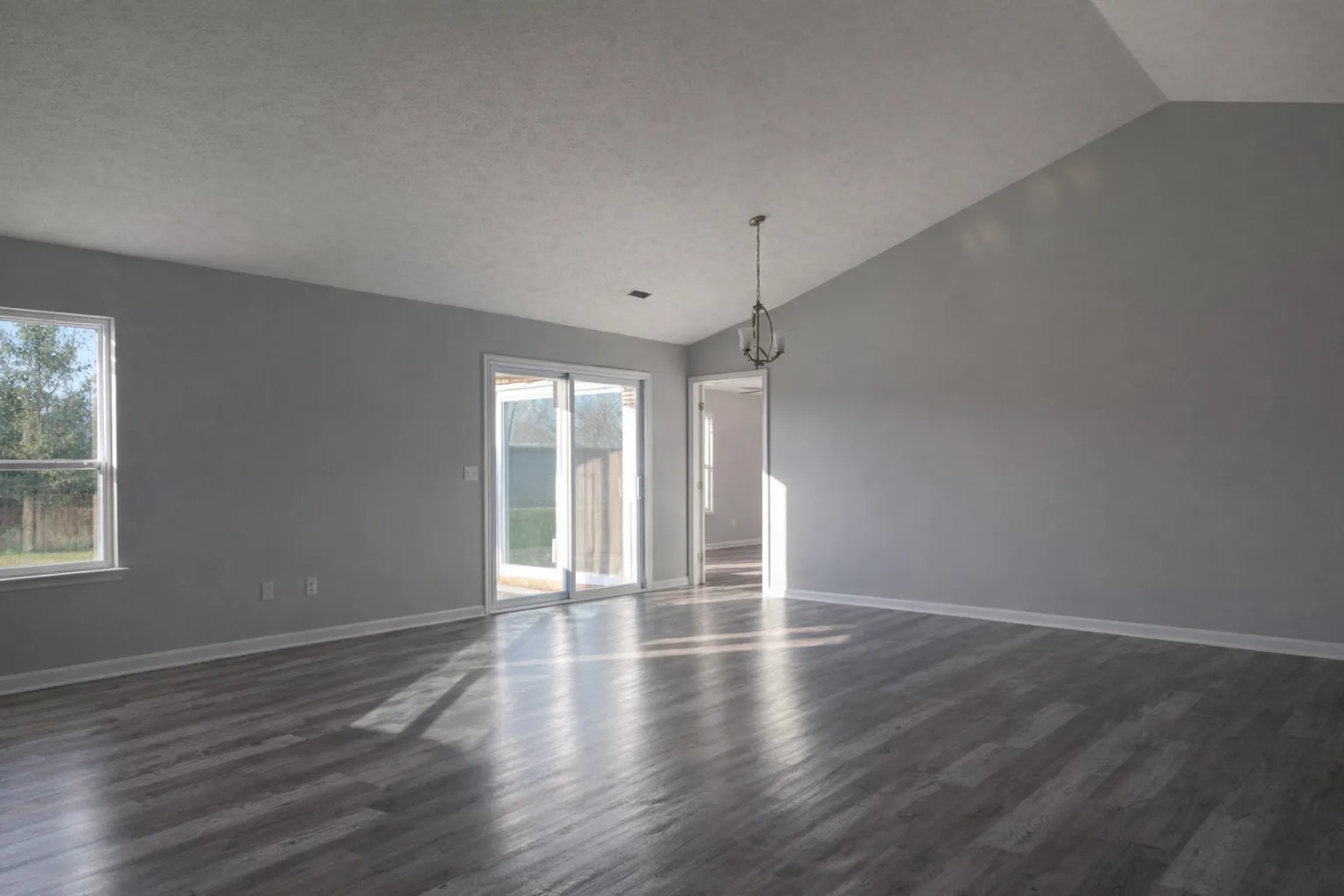
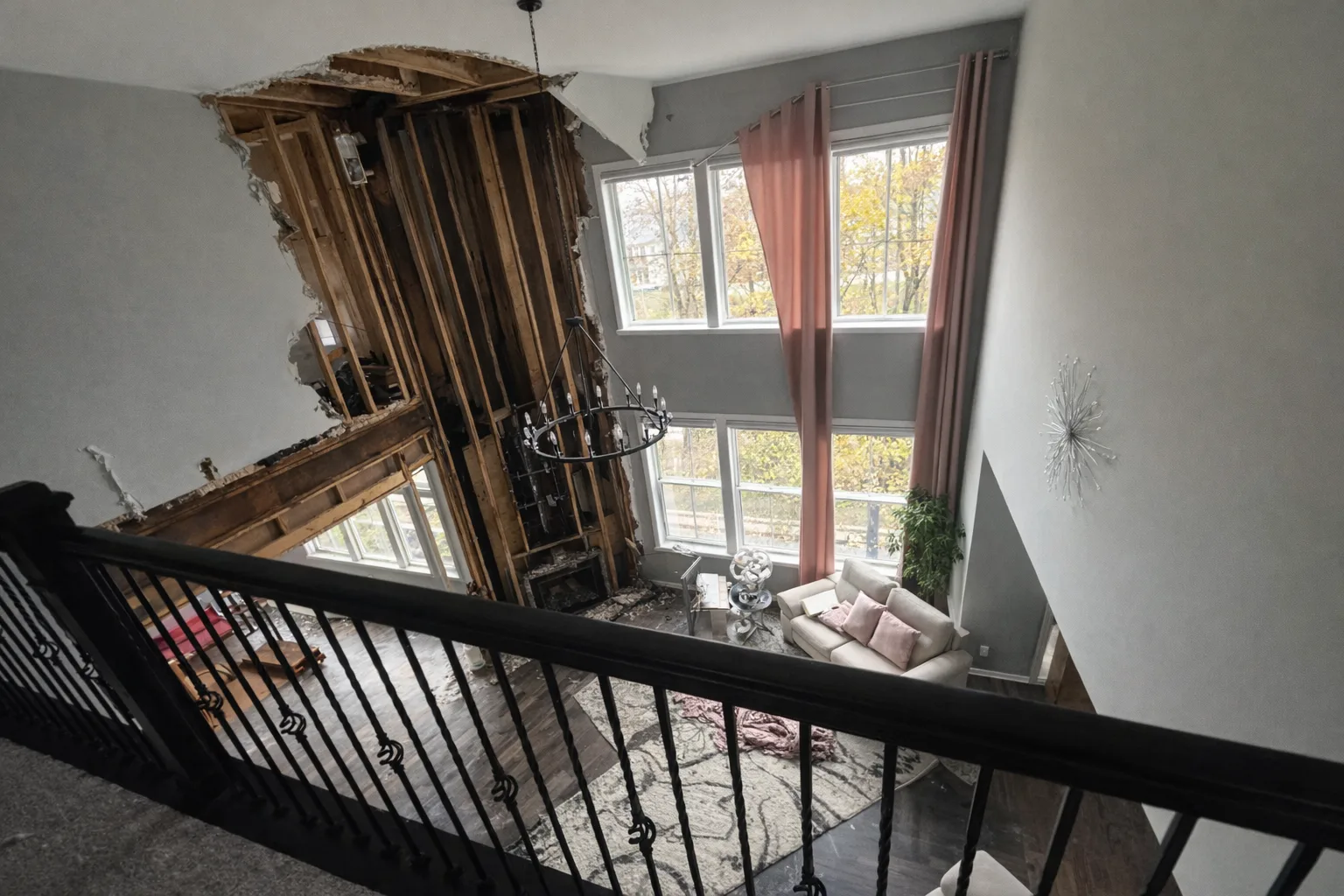
Real homes, real work, anonymized for privacy. Browse the full job photos and walkthroughs.