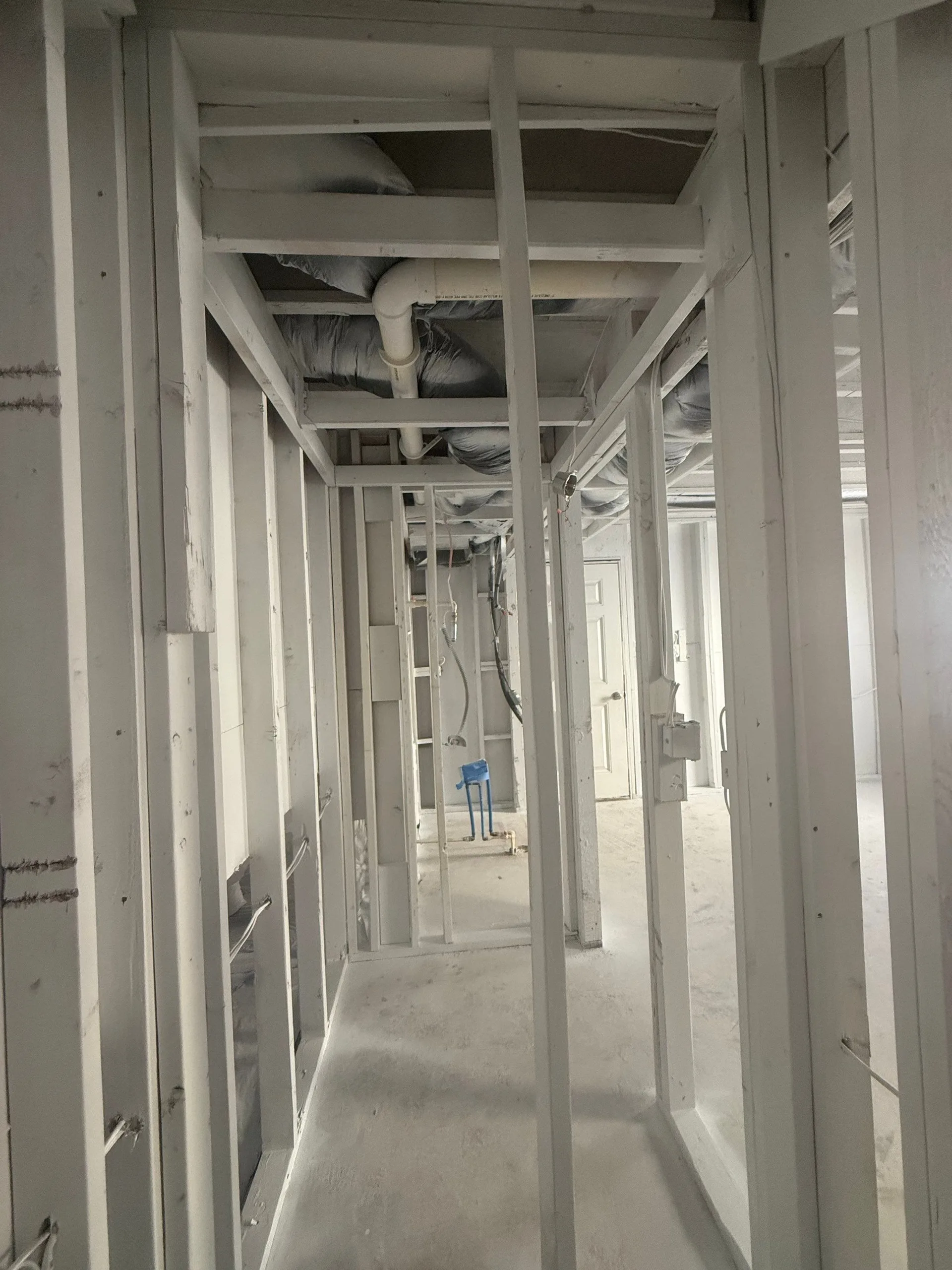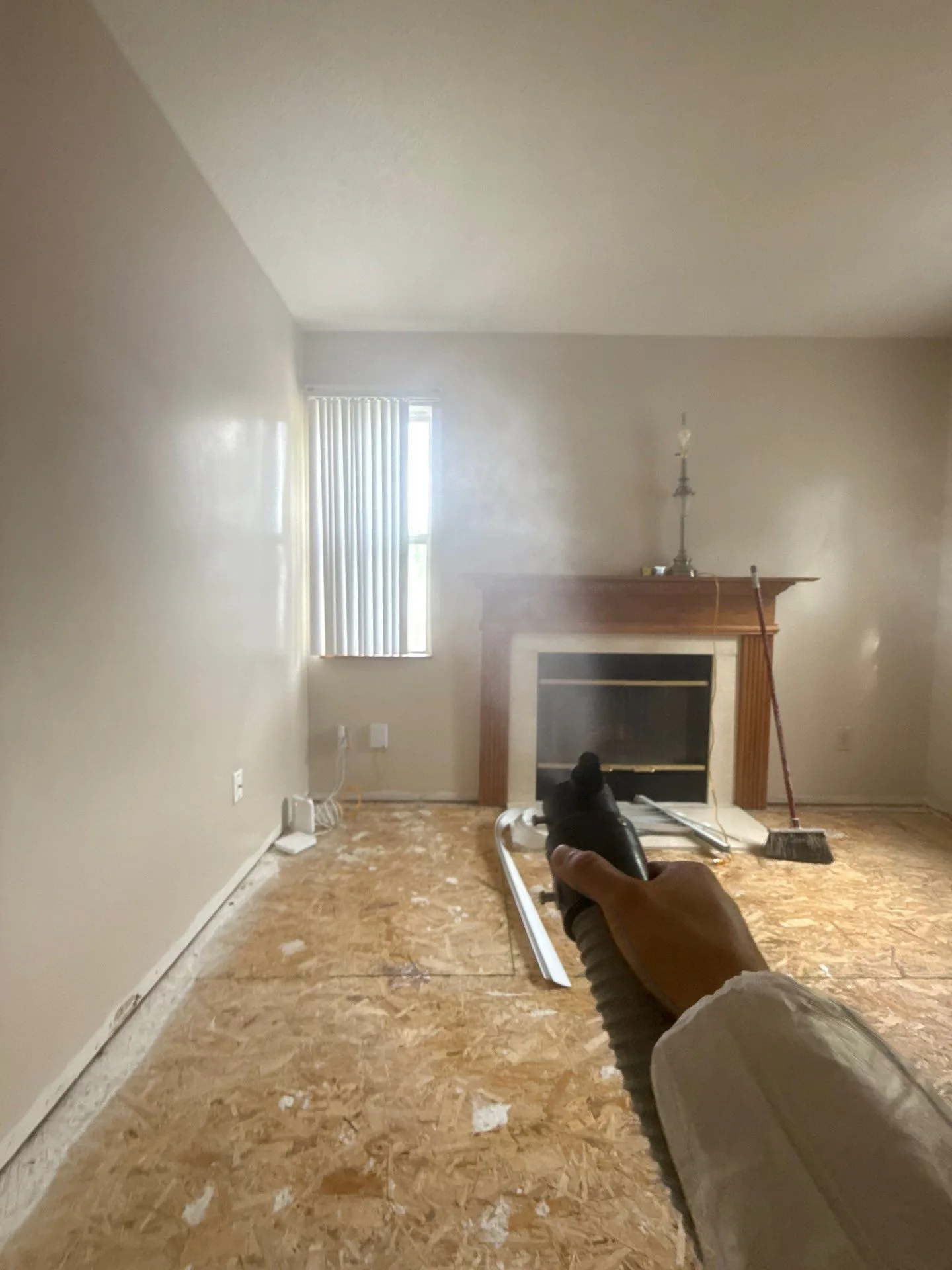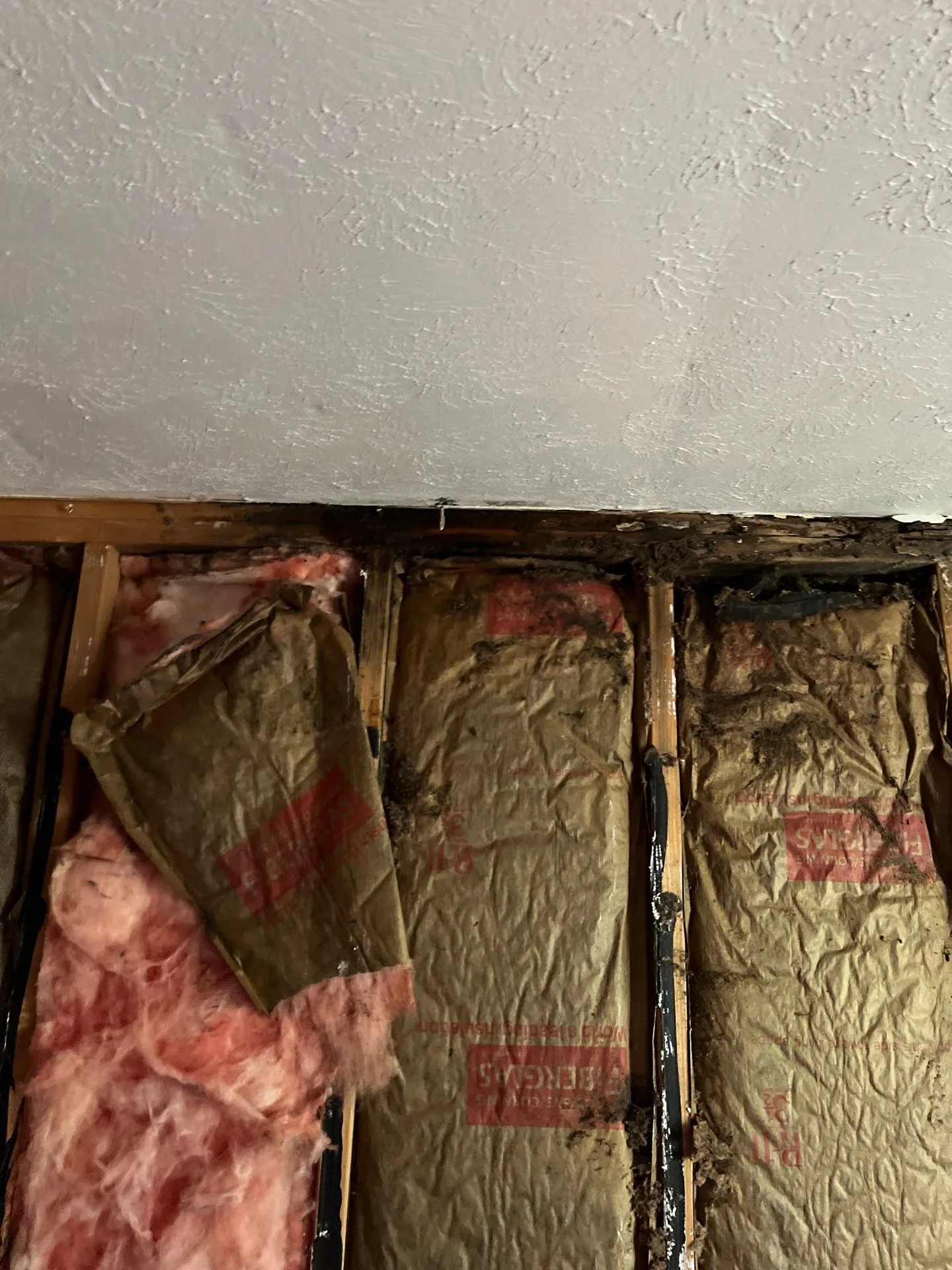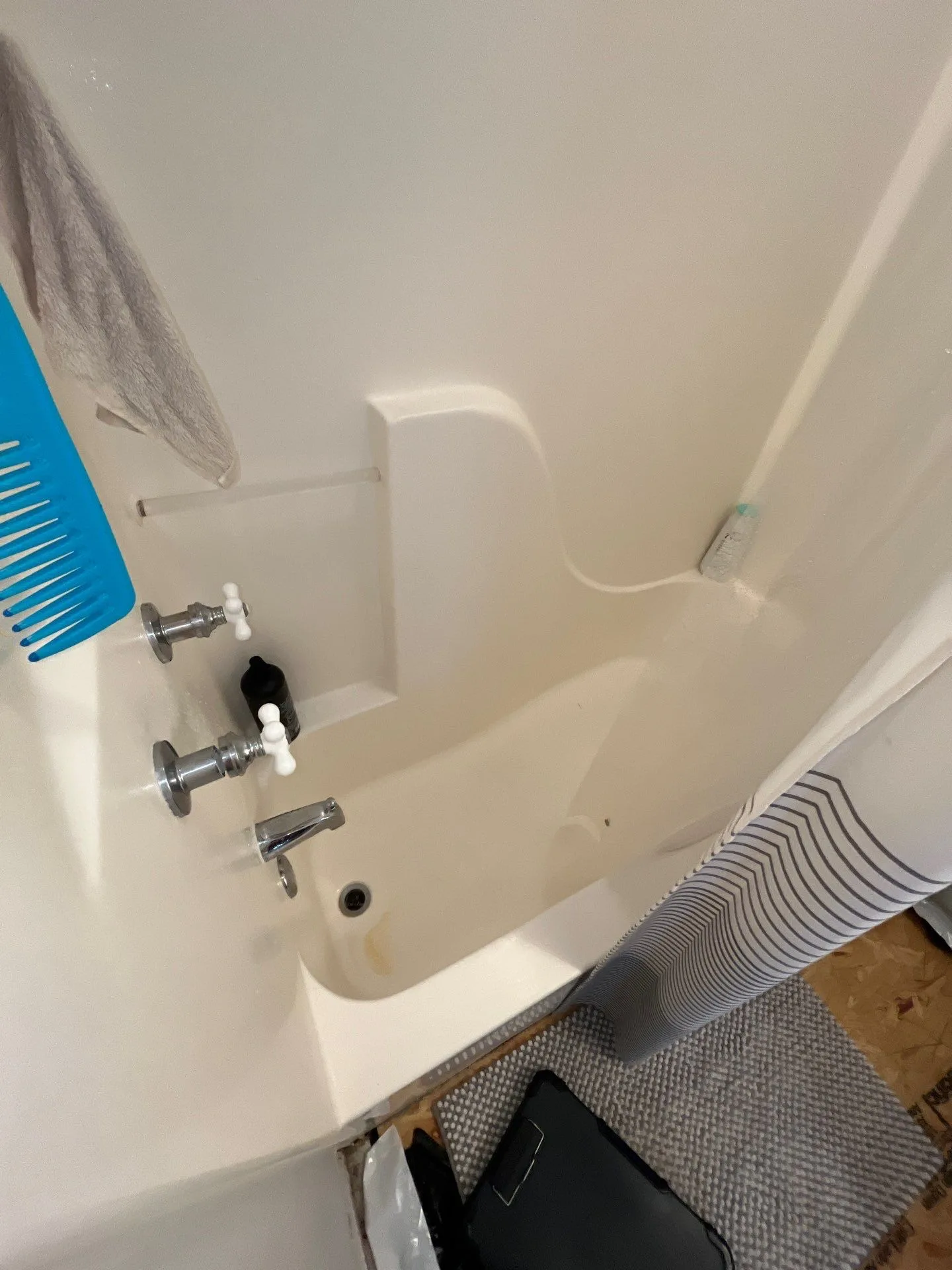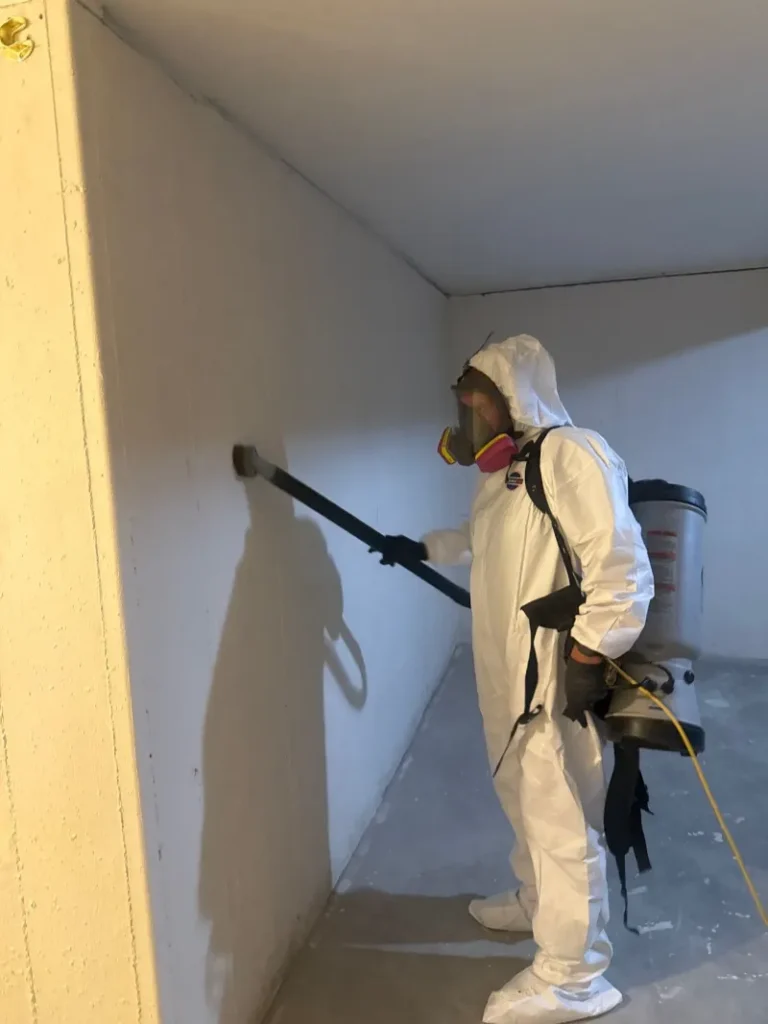
Mold spores activate within 24·48 hours of moisture intrusion. What looks like a small surface problem is often deeper. We inspect with thermal imaging, contain with negative-air pressure, remove to IICRC S520 standard, and rebuild · one IICRC-certified, veteran-owned team from first call to final walkthrough.
Most mold companies stop at removal. We do the whole job · inspection, containment, removal, antimicrobial treatment, and full reconstruction of what came out · from one IICRC-certified team with a single point of contact.
Thermal imaging and calibrated moisture meters locate moisture trapped behind walls and under flooring before we open anything. You see the map. The adjuster sees the map.
Plastic sheeting and negative-air pressure machines isolate the affected area. Spores stay in the work zone · not in your HVAC, not in adjacent rooms.
Commercial HEPA air scrubbers run continuously throughout the project, capturing airborne spores down to 0.3 microns. Air quality is verified before containment comes down.
Affected drywall, insulation, and flooring is removed, bagged, and disposed of properly. Nothing gets painted over. Nothing gets left in the wall.
EPA-registered antimicrobial applied to all affected structural surfaces after removal. Addresses residual spores on framing, concrete, and subfloor that removal alone cannot reach.
The same Guardian Angel crew rebuilds drywall, flooring, trim, and paint. No sub-contractor handoff. Same materials grade we would use in our own homes.
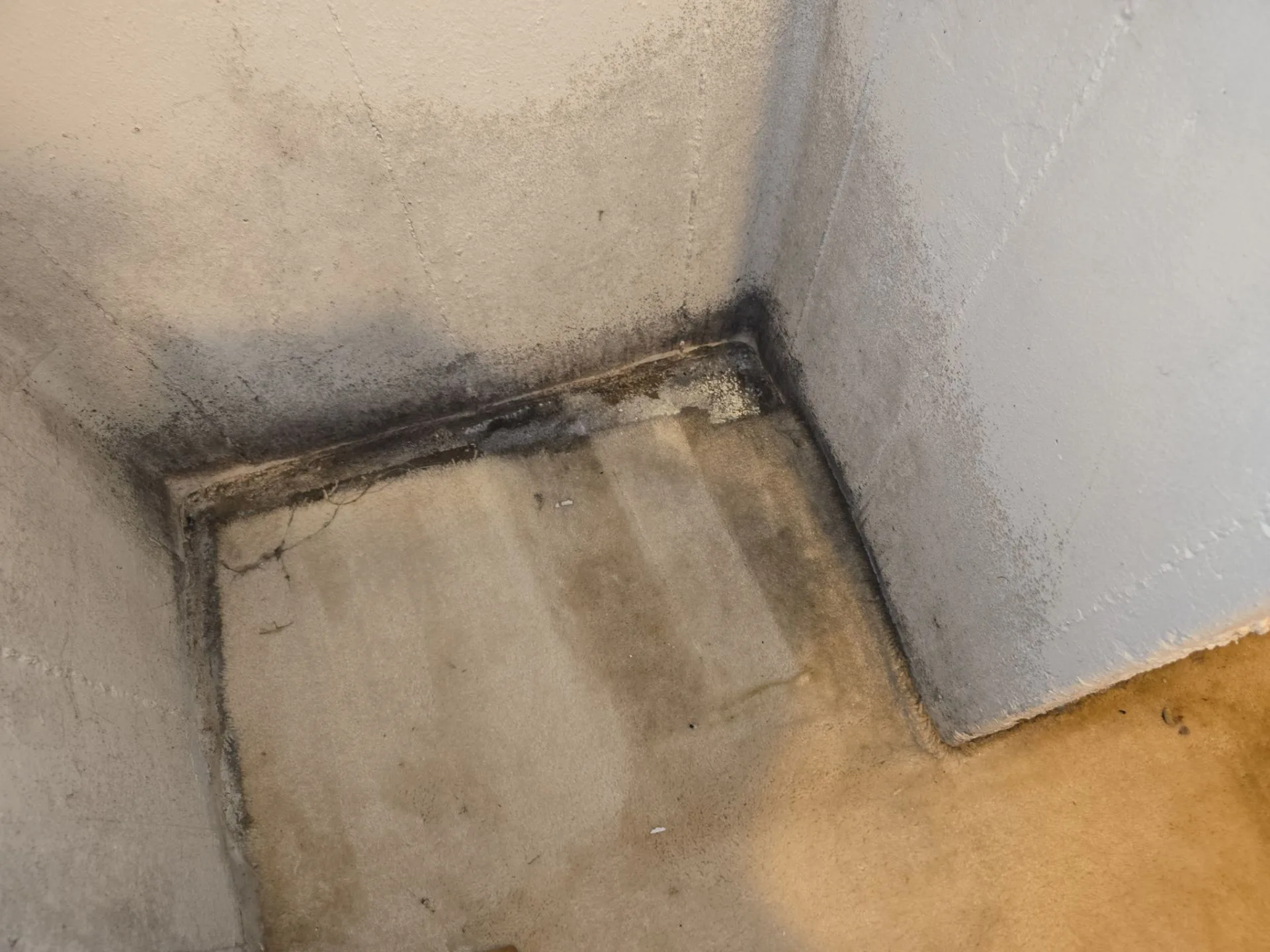
Mold grows where moisture collects and stays · inside wall cavities, beneath subfloor sheathing, inside insulation batts. By the time you can see it on a painted surface, it has typically been growing in the dark for weeks. The surface patch is not the project. Finding and eliminating the hidden colony is.
Thermal imaging lets us see moisture gradients through finished walls without opening them. We map it, show you the evidence, and give you a written scope before any demolition begins. You know exactly what is coming out and why.
Call (812) 441-4814 · free inspection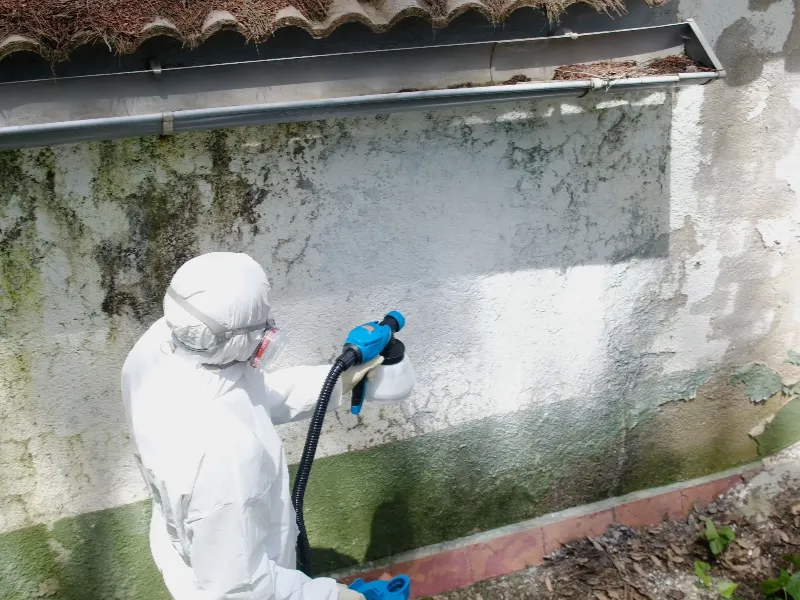
From the first call to post-remediation verification, here is how every mold remediation project runs at Guardian Angel Restoration.
We walk the affected area with thermal imaging cameras and calibrated moisture meters. Every moisture reading is logged. We identify the source of the moisture, not just the mold it produced · because removing mold without stopping the moisture is not remediation, it is delay.
Plastic sheeting seals the work zone from the rest of the home. Negative-air pressure machines exhaust contaminated air through HEPA filters to the exterior. Spores cannot migrate to unaffected rooms or your HVAC system during the work.
Commercial HEPA air scrubbers run from setup through teardown. Airborne spore counts are verified before the containment barrier comes down. We do not declare a room clean until the air confirms it.
Mold-affected drywall, insulation, subfloor sections, and any other porous materials are removed, double-bagged in labeled disposal bags, and hauled off-site. Staging for insurance adjuster review happens before disposal if a claim is open.
Once contaminated materials are out, EPA-registered antimicrobial is applied to framing, concrete, and any remaining structural surfaces. This step addresses residual spores that removal alone cannot reach · the difference between remediation and a short-term fix.
Drywall, insulation, flooring, trim, and finish work rebuilt by the same crew. Not a sub-contractor you have never met. Guardian Angel handles it from the studs up.
A final inspection confirms mold counts have returned to normal background levels. Then, and only then, we do the final walkthrough with you line by line. Peace of mind is our final deliverable.
Homeowners insurance mold coverage is one of the most misunderstood parts of any policy. Most standard policies either cap mold at $5,000·$10,000 or exclude it entirely · unless the mold stems directly from a covered water loss that was discovered and reported within a defined window.
If a burst pipe caused the moisture, mold remediation Indianapolis adjusters often accept it under the original water claim when it is documented correctly. Gradual leaks and chronic humidity problems are almost always excluded. The difference between a covered claim and an out-of-pocket bill is often how well the loss was documented.
We advocate for the homeowner, not the insurance policy. That means helping you scope the loss correctly, submitting documentation that gives adjusters no room to under-settle, and disputing scopes that leave out legitimately covered work.
How insurance claims workThe average mold remediation cost for a single affected area in a Hamilton County home runs $1,500·$6,000. Whole-house contamination involving multiple rooms, HVAC systems, or structural framing can exceed $20,000. What drives the number is scope · how much material is affected, how accessible it is, and what reconstruction is required.
Typically $1,500·$3,500. Most common scenario · a bathroom leak, a slow supply line, or crawlspace moisture wicking into an adjacent wall.
Typically $2,500·$6,000 depending on finished vs. unfinished, presence of insulation, and extent of framing involvement.
Mold in ductwork requires specialist cleaning in addition to surface remediation. Ranges widely; requires separate assessment of the air-handling system.
Multi-room or structural framing involvement can exceed $20,000. We document the full scope for insurance before work begins.
Guardian Angel provides a written scope with line-item pricing before any material is removed. No open-ended estimates. No tear-out without your sign-off. If insurance is involved, we submit the Xactimate-grade scope directly to your adjuster.
Black mold removal Indianapolis calls and Hamilton County mold inspections follow patterns we see across the county. Knowing where your home type falls helps.
Tight building envelopes trap basement humidity with nowhere to go. We see moisture-related mold in finished basements within 3·5 years of construction, especially in homes without active dehumidification.
Crawlspace moisture is the leading issue. Inadequate vapor barriers and poor ventilation let ground moisture wick into the floor system and wall plates above.
Improperly insulated supply lines and over-sized A/C systems create condensation that drips into framing and insulation. Slow and invisible until mold appears on a finished surface.
Supply and drain lines behind walls fail slowly. By the time you notice discoloration on a surface, the drywall cavity has been saturated for weeks. Thermal imaging finds the wet zone.
Headquartered in Noblesville. Crews dispatched throughout central Indiana. 2-hour guaranteed on-site response.
The average cost of mold remediation for a typical residential project in Hamilton County runs $1,500·$6,000. Whole-house contamination can exceed $20,000. The range is wide because scope matters · a single bathroom wall is a very different project from mold behind finished basement drywall across three rooms. We provide a written scope with line-item pricing before any tear-out begins. No surprises.
It depends on the cause. Most standard homeowners policies cap mold coverage at $5,000·$10,000, and some exclude it entirely unless the mold stems from a covered water loss caught within a defined window. If a burst pipe caused the moisture and you called quickly, there is a strong case for coverage. Gradual leaks or chronic humidity are typically excluded. We help you read your policy and document the loss so what is legitimately covered gets covered · we advocate for the homeowner, not the insurance policy.
Mold spores activate within 24·48 hours of moisture intrusion under the right conditions: warmth, darkness, and a porous surface. This is why structural drying must be complete within 72 hours of a water loss. If drying was delayed or incomplete, mold is likely already present even if it is not yet visible.
Black mold (Stachybotrys chartarum) is a specific species that grows in high-moisture environments · typically on drywall and cellulose materials after prolonged water intrusion. Any mold growth in a home can trigger respiratory issues, allergy symptoms, and asthma flare-ups in sensitive individuals. The practical answer is: all visible mold gets properly remediated under IICRC S520 protocols regardless of species. We do not panic-sell, and we do not minimize. We scope it accurately and fix it completely.
Often, yes. Visible mold on a surface is frequently the edge of what has grown behind it · inside wall cavities, beneath flooring, and inside insulation. Thermal imaging and moisture mapping let us see where moisture is trapped without opening every wall. We scope conservatively and give you a written assessment before we remove anything.
IICRC S520 is the industry standard that governs how mold remediation is planned and executed · containment protocols, PPE requirements, HEPA filtration standards, proper disposal, and post-remediation verification testing. A company following S520 is not guessing. They are following a documented professional protocol. Guardian Angel Restoration technicians are IICRC certified and follow S520 on every mold project.
Yes. Mold remediation often requires removing contaminated drywall, insulation, subfloor sections, or framing. The same Guardian Angel crew that does the remediation handles the rebuild · drywall, flooring, trim, paint. No sub-contractor handoff. One team, one point of contact, from the first inspection to the final walkthrough.
Basement humidity is the leading cause we see in Westfield and Zionsville, where newer builds have tight building envelopes that trap moisture. Crawlspace moisture is common in older Noblesville homes. HVAC condensation issues and slow plumbing leaks behind finished walls are widespread across the county regardless of home age. If you have had any water event in the last six months, a moisture inspection is worth the call.
Real homes, real work, anonymized for privacy. Browse the full job photos and walkthroughs.