IICRC categorizes water losses into three categories. Category 1 is clean water (broken supply line). Category 2 is gray water (washing machine overflow, dishwasher leak: slightly contaminated). Category 3 is black water: sewage backups, septic failures, flood water from outside the home. Category 3 contains pathogens that can make your family sick. It is biohazardous. It is regulated. And it is not a DIY job.
What's actually in sewage water
Sewage backup water typically contains:
- Bacteria. E. coli, Salmonella, Shigella, Vibrio, Campylobacter. These cause severe gastrointestinal illness, and in immunocompromised people, can be fatal.
- Viruses. Norovirus, Hepatitis A, Rotavirus, Adenovirus. Norovirus alone is responsible for ~20 million U.S. illnesses per year.
- Parasites. Giardia, Cryptosporidium. Resistant to typical disinfectants.
- Fungi. Various molds active in the contaminated water itself.
- Chemicals. Cleaning products, pesticides, fuel residues that have entered the sewer system.
These pathogens become airborne when contaminated water is disturbed: mopped, agitated, walked through. You can become ill simply by being in the same room as actively-contaminated water without proper PPE.
Why "I'll just clean it up myself" goes wrong
The typical DIY sewage cleanup goes like this:
- Homeowner grabs a mop and bucket, maybe a shop vac.
- Spends 2-4 hours pushing contaminated water around the affected area.
- Disinfects with bleach or pine-sol. Visible cleanup looks done.
- Materials underneath: carpet pad, drywall, subfloor, remain saturated and contaminated.
- 2-7 days later: mold appears, odor returns, family members get sick.
- Now a $3,000 emergency response has become a $15,000 remediation job: plus medical bills.
The single most important rule for sewage cleanup
Do not touch it. Do not mop it. Do not shop-vac it. Do not walk in it. Call a Category 3 certified restoration company. Wait outside the affected area until they arrive.
What a professional Category 3 cleanup actually involves
- PPE deployment. Full-face respirators, Tyvek suits, double-glove protocol, dedicated decon shoes. Crew is properly equipped before entering.
- Isolation and containment. Plastic barriers, negative-air-pressure chambers to prevent contamination spread. HVAC sealed.
- Source control. Identify and stop the sewage source: clogged main line, failed sump pump, septic backup. Often requires a plumber coordination.
- Extraction. Pump-truck extraction of all contaminated water. NEVER shop vacs: those just spread spores via the exhaust.
- Material removal. Porous materials (carpet, pad, drywall, insulation) that contacted Category 3 water cannot be saved. They are bagged in biohazard-labeled containment bags and disposed per OSHA / EPA regulations.
- Cleaning. All surviving hard surfaces cleaned with EPA-registered hospital-grade disinfectants. Multiple passes.
- Antimicrobial treatment. Applied per IICRC standard. Specific kill claim for sewage pathogens.
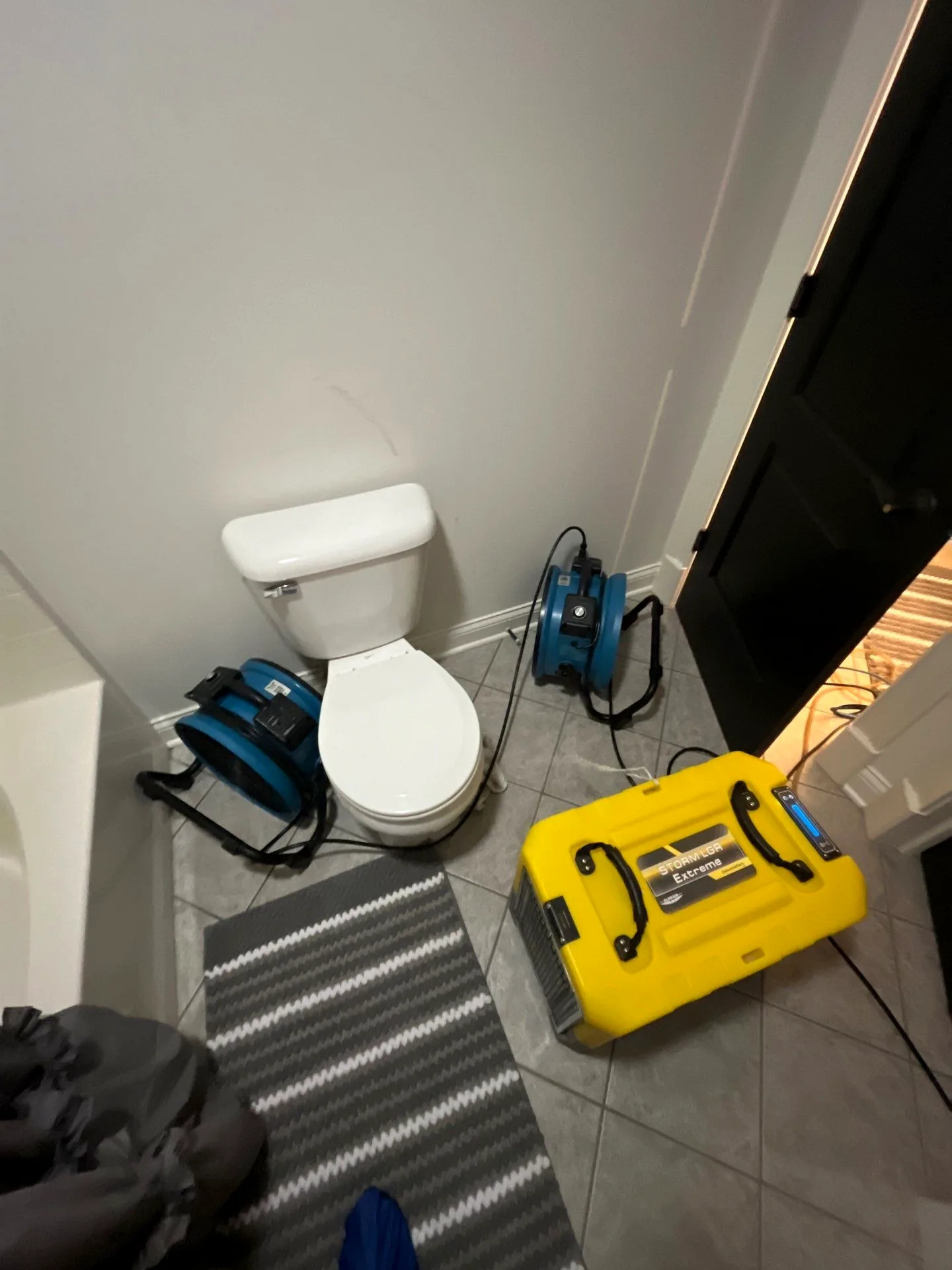
- Drying. Industrial air movers and dehumidifiers run until materials hit normal moisture content.
- Air clearance testing. Air quality sampling to verify the space is safe for re-occupation. Lab-verified.
- Reconstruction. Drywall, flooring, finishes restored. We do this from the same crew, no hand-offs.
What insurance typically covers
Sewage backup coverage in Indiana is tricky.
Standard HO-3 policies typically exclude sewer/water backup unless you have a specific endorsement. The water/sewer backup endorsement is inexpensive (often $50-$150/year) but most homeowners do not have it.
If you have the endorsement, sewage cleanup is typically covered up to your sub-limit (commonly $5,000-$25,000). If you do not have it, you may be paying out of pocket: though some carriers will still cover if the backup is the secondary result of another covered cause.
Check your declarations page now, not after you have a backup. Specifically look for "water/sewer backup," "sewer drain backup," or similar language.
Hamilton County notes
Sewage backups in our market are most common during:
- Heavy spring rain events when municipal sewer systems overwhelm capacity
- Tree-root intrusion failures in older Indianapolis neighborhoods (Meridian-Kessler, Irvington, neighborhoods with mature trees over aging clay sewer lateral lines)
- Septic system failures in rural Hamilton County properties
- Lift station failures in newer subdivisions during power outages
What to do RIGHT NOW if you have a sewage backup
- Get out of the affected area. Keep pets and children out.
- Turn off circuit breakers feeding the affected area.
- Do not run fans, HVAC, or air movers.
- Call us: (812) 441-4814. 24/7. We can be on-site within 2 hours.
- Take photos through doorways without entering, if safe.
- Do not contact furniture, items, or surfaces in the affected zone.
Related reading
FAQs
Can I clean small sewage spills myself?
No. Even small sewage spills should be handled by trained professionals with proper PPE. The pathogen risk is the same whether the volume is one gallon or one hundred.
How fast can you respond?
2-hour on-site guarantee anywhere in Hamilton County, 24/7.
Will my homeowners insurance cover this?
Only with the water/sewer backup endorsement. Check your declarations page before you have a backup, not after.
Michael Talbot is the founder of Guardian Angel Restoration. Veteran-owned. IICRC certified. Hamilton County and Greater Indianapolis. 24/7.